Thinking about buying a historic home near Baker Park? You are not just shopping for square footage. You are stepping into one of Frederick’s most distinctive settings, where architecture, preservation rules, and tight inventory can shape both your lifestyle and your buying strategy. If you want charm without surprises, it helps to know what to look for before you write an offer. Let’s dive in.
Why Baker Park stands out
Baker Park sits in the heart of Historic Downtown Frederick and has been an important part of the area’s historic landscape since 1928. The park itself covers 58 acres, and the homes around it reflect an older, preservation-minded urban setting rather than a newer subdivision pattern.
That matters because buying here is often about more than finishes and floor plans. You may be choosing between homes built in very different eras, with different materials, layouts, and maintenance needs. Near Baker Park, location and character often go hand in hand.
What kind of homes you may find
The Frederick Historic District includes 2,635 resources, with 2,435 considered contributing to its significance. The district contains residential, commercial, ecclesiastical, and industrial buildings dating from the late 18th century to 1941, which gives this part of Frederick a wide architectural range.
So, if you are house hunting near Baker Park, do not expect one uniform style. You may see attached brick rowhouses, detached homes, and later infill from several periods. That variety is part of the appeal, but it also means each property deserves a close, individual review.
Federal and Greek Revival homes
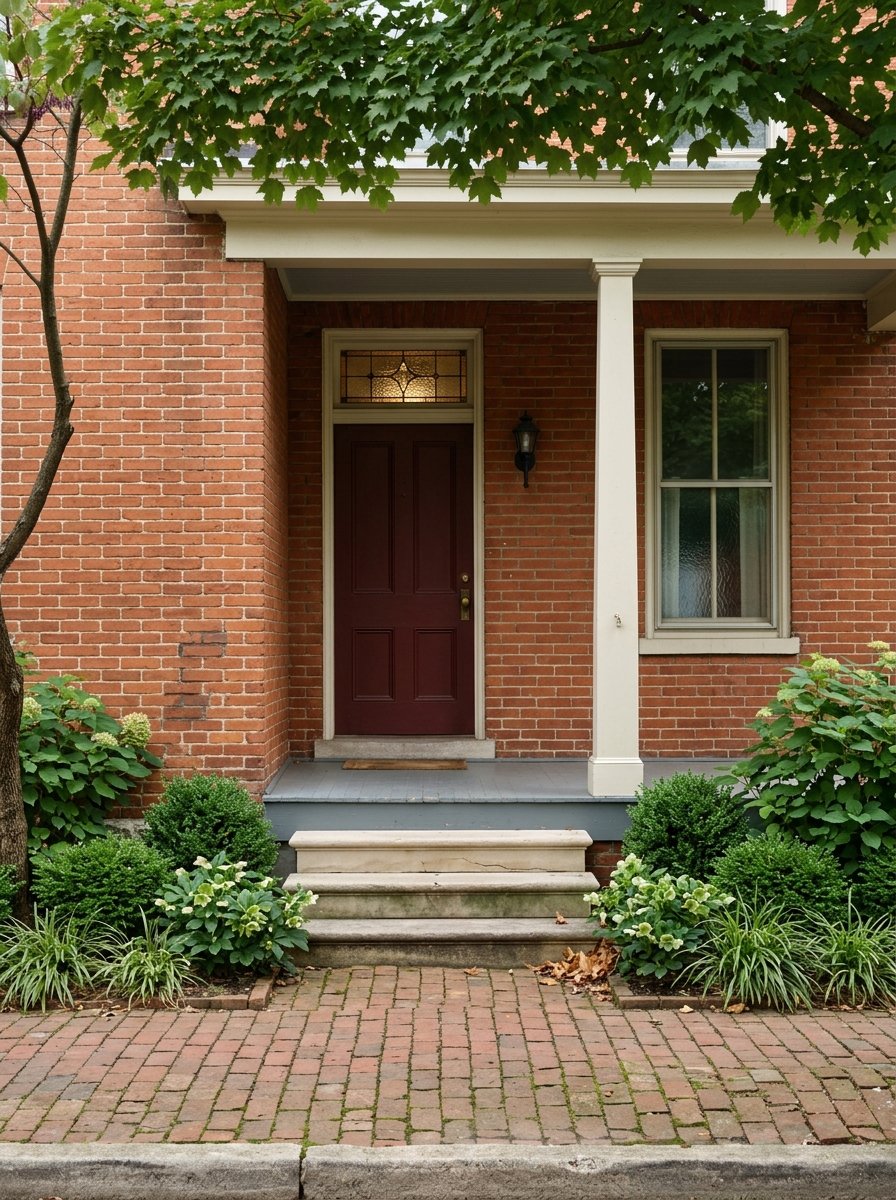
Frederick’s 1810 to 1860 streetscape is strongly shaped by Federal and Greek Revival architecture. These homes often feature symmetry, brick construction, fanlights, sidelights, and in Frederick, distinctive parapeted dormers sometimes called Top Hat Dormers.
If you love clean lines and classic proportions, these homes can be especially appealing. They may also come with older materials and preservation considerations that need a careful eye during inspection and renovation planning.
Italianate, Queen Anne, and later styles
Italianate homes in Frederick often include pronounced eaves, brackets, elongated windows, arched details, and decorative cornices. Queen Anne houses are often more visually elaborate, with asymmetrical forms, porches, towers or polygonal bays, decorative shingles, and wood trim.
You may also come across Colonial Revival homes, American Foursquares, and bungalows from the early 1900s. In practical terms, that means your search near Baker Park can include everything from ornate Victorian-era details to simpler early-20th-century layouts.
What to inspect in an older home
A historic home can offer lasting character, but it usually calls for a broader inspection mindset than a newer home. The goal is not to assume every old feature is a problem. The goal is to understand condition, maintenance history, and likely future costs.
A strong inspection strategy can help you separate cosmetic charm from true repair needs. Near Baker Park, a few issues deserve extra attention.
Lead paint disclosures matter
If the home was built before 1978, lead-based paint should be part of your due diligence. Older homes are more likely to contain lead paint, and the EPA says 87% of homes built before 1940 and 24% of homes built between 1960 and 1978 contain some lead-based paint.
For most pre-1978 homes, sellers must disclose known lead information before sale. Buyers also generally have a 10-day period to conduct a paint inspection or risk assessment if the contract allows for it. That makes timing and contract terms especially important when you are moving quickly in a competitive situation.
Moisture and masonry deserve close review
In older homes, water is often the issue behind the issue. Moisture intrusion around roofs, walls, windows, and openings can lead to deterioration over time, and masonry problems such as missing mortar, cracks, or improper coatings can trap moisture and make damage worse.
When you tour homes near Baker Park, pay attention to the exterior envelope. Chimneys, masonry joints, window areas, and visible signs of deferred exterior maintenance can all point to future repair costs. A beautiful brick exterior is a major asset, but only if it has been maintained properly.
Original windows are not always a red flag
Historic wood windows often last a very long time with routine maintenance. Preservation guidance emphasizes evaluating repair before replacement, which is helpful for buyers because old windows are often misunderstood.
In other words, original windows can be a character feature and a maintenance item at the same time. They are not automatically a defect. If a home still has original windows, you will want to understand their condition, how they have been maintained, and what local review may apply if you ever want to change them.
Know the historic review process
One of the biggest mistakes buyers make is assuming they can purchase first and figure out renovation rules later. Near Baker Park, that can create delays and frustration, especially if the property is inside the Frederick Town Historic District or another local historic overlay.
Before you make plans for exterior changes, verify the property’s designation at the parcel level. The review requirements apply based on the specific property, not just the general neighborhood name.
What requires approval
The City of Frederick states that exterior rehabilitation work, additions, new construction, and site modifications require Historic Preservation Commission approval and a building or zoning permit before work begins. Some categories of work may be approved administratively, which can help streamline smaller projects.
That is why it helps to think through your plans early. If you are hoping to update windows, siding, porches, lighting, or add onto the home, those choices may affect your timeline, budget, and final design.
Why planning early can save stress
The city’s historic-district manual says rehabilitation is the approved treatment for buildings and sites in the Frederick Town Historic District. The city uses its own guidelines together with the Secretary of the Interior’s Standards when reviewing changes.
For you, the practical takeaway is simple. If you are buying a historic home with renovation plans, your buying decision should include both the house as it is today and the review process that may shape what you can do next.
How the Baker Park market compares
Baker Park is a small, high-value micro-market with very limited inventory. Realtor.com shows only 5 Baker Park homes and 2 Baker Park rentals, while Redfin shows 3 active homes for sale. Redfin also reported a median sale price of $844,000 in February 2026, though that figure came from just two closed sales, so it is best treated as directional.
That thin inventory matters because low supply can make each listing feel unique. It can also make pricing more sensitive to condition, architecture, exact location, and renovation status.
Nearby areas can behave differently
Downtown Frederick showed 29 homes for sale in March 2026, a 98% sale-to-list ratio, and Realtor.com classified it as a buyer’s market. That is a useful reminder that two closely connected areas can behave differently based on housing type, price point, and available inventory.
At the city level, Zillow reported an average Frederick home value of $466,011 with homes going pending in about 14 days as of March 31, 2026. Redfin reported a March 2026 median sale price of $449,990 and 42 median days on market. Different sources use different methods, but both place Frederick well below the Baker Park premium.
What that means for buyers
A home near Baker Park may command a premium for setting, character, and scarcity. At the same time, price can shift quickly based on block, condition, and whether the property sits inside a preservation overlay.
This is where local guidance matters. In a micro-market with limited inventory, broad city numbers only tell part of the story. You need property-specific context to know whether a listing is priced for its historic features, its renovation needs, or both.
Smart steps before you buy
If you are serious about buying a historic home near Baker Park, it helps to move in a clear order. That can help you stay competitive without skipping the details that matter most.
Here is a practical checklist to use:
- Confirm whether the property is inside the Frederick Town Historic District or another local historic overlay
- Review likely exterior projects before you make an offer
- Plan for inspections with older-home concerns in mind, especially lead, moisture, masonry, and windows
- Look beyond cosmetic updates and ask about maintenance history
- Compare the home to both Baker Park and broader Frederick market conditions, not just one data point
- Build enough time into your decision-making for property-specific due diligence
Why local guidance helps here
Buying near Baker Park is rarely a plug-and-play purchase. You are balancing charm, condition, market scarcity, and possible historic review requirements all at once.
That is why many buyers benefit from a clear, educational approach. When you understand the house, the block, and the process, you can make a stronger decision with fewer surprises later.
If you are exploring historic homes near Baker Park and want practical guidance on pricing, inspections, and next steps, reach out to Melissa Lambert for local insight and hands-on support.
FAQs
What makes homes near Baker Park different from other Frederick homes?
- Homes near Baker Park are often part of a historic, preservation-minded setting in the heart of Historic Downtown Frederick, with a wide mix of architectural styles, older materials, and limited inventory.
What architectural styles might you see near Baker Park in Frederick?
- Buyers may encounter Federal, Greek Revival, Italianate, Queen Anne, Colonial Revival, American Foursquare, bungalow, attached rowhouse, and detached single-family home styles depending on the block and period of development.
What should you inspect when buying a historic home near Baker Park?
- Key inspection themes often include lead-based paint, moisture intrusion, masonry condition, window condition, and signs of deferred maintenance that could point to larger repair needs.
Do exterior renovations near Baker Park need city approval?
- If the property is in the Frederick Town Historic District or another applicable local overlay, exterior rehabilitation work, additions, new construction, and site modifications require city review and permits before work begins.
Is Baker Park more expensive than the rest of Frederick?
- Available market data suggests Baker Park often carries a premium compared with broader Frederick city pricing, but value can vary widely based on inventory, condition, exact location, and historic designation.